
Floating Markets in the Memories of Childhood
Growing up in a modest countryside in the Mekong Delta, my earliest memories are tied to the year-end trips with my parents to the floating market to prepare for Tet. My father often said that life in the Delta would never be complete without at least one morning drifting along the waterways to buy food and festive goods. Over the years, floating markets have become a vivid cultural symbol and a defining feature of the peaceful riverine lifestyle of Southern Vietnam.
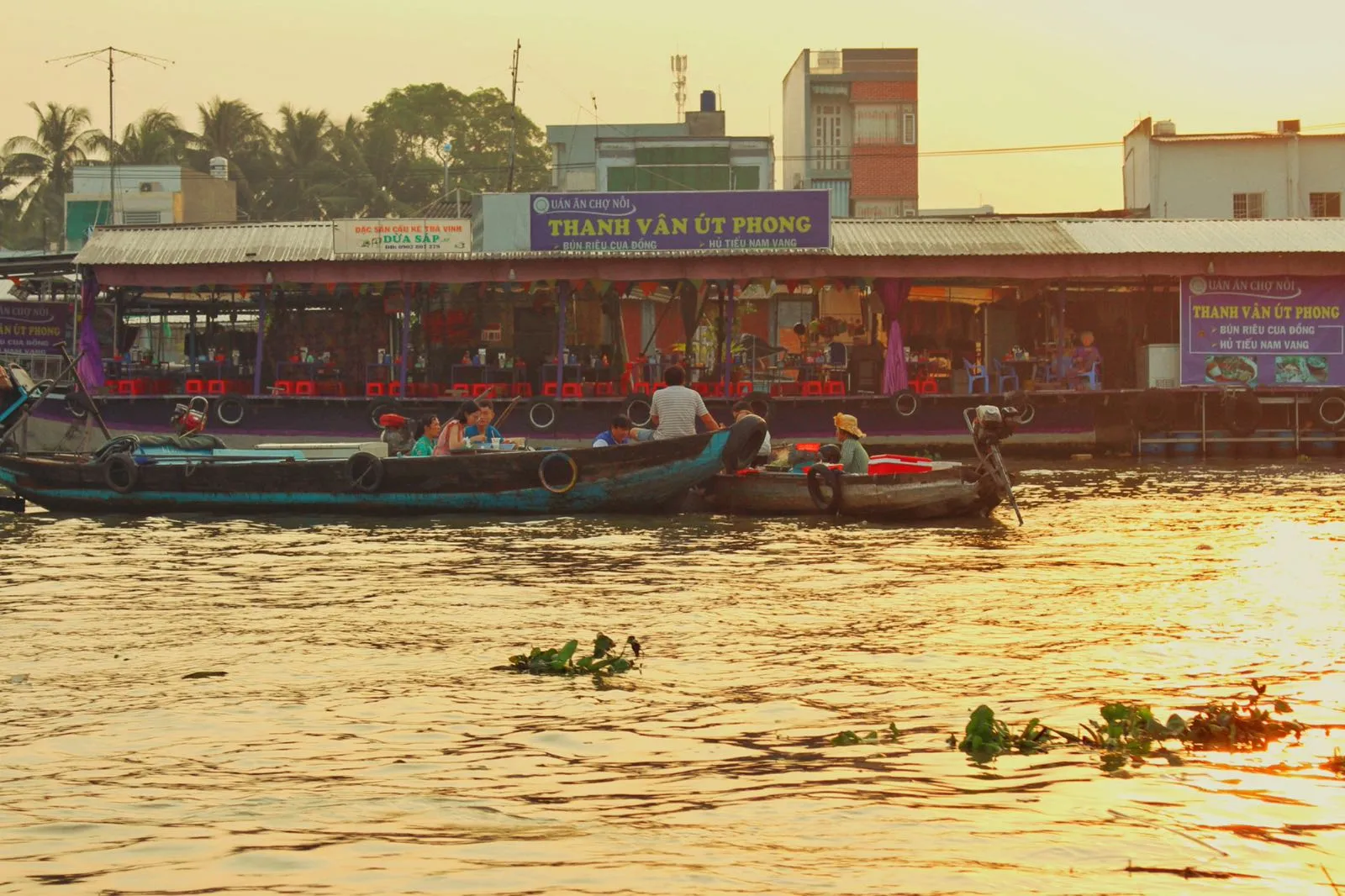
Most floating markets in the Mekong Delta begin their day very early, around three to four in the morning. The sounds of vendors calling out to customers and exchanging greetings blend with cheerful conversations along the riverbanks to mark the start of a new day. This was also the time when my mother prepared the broth for our family’s noodle soup, the dish that supported us through many years living on the waters of the Nga Nam Floating Market in Soc Trang.
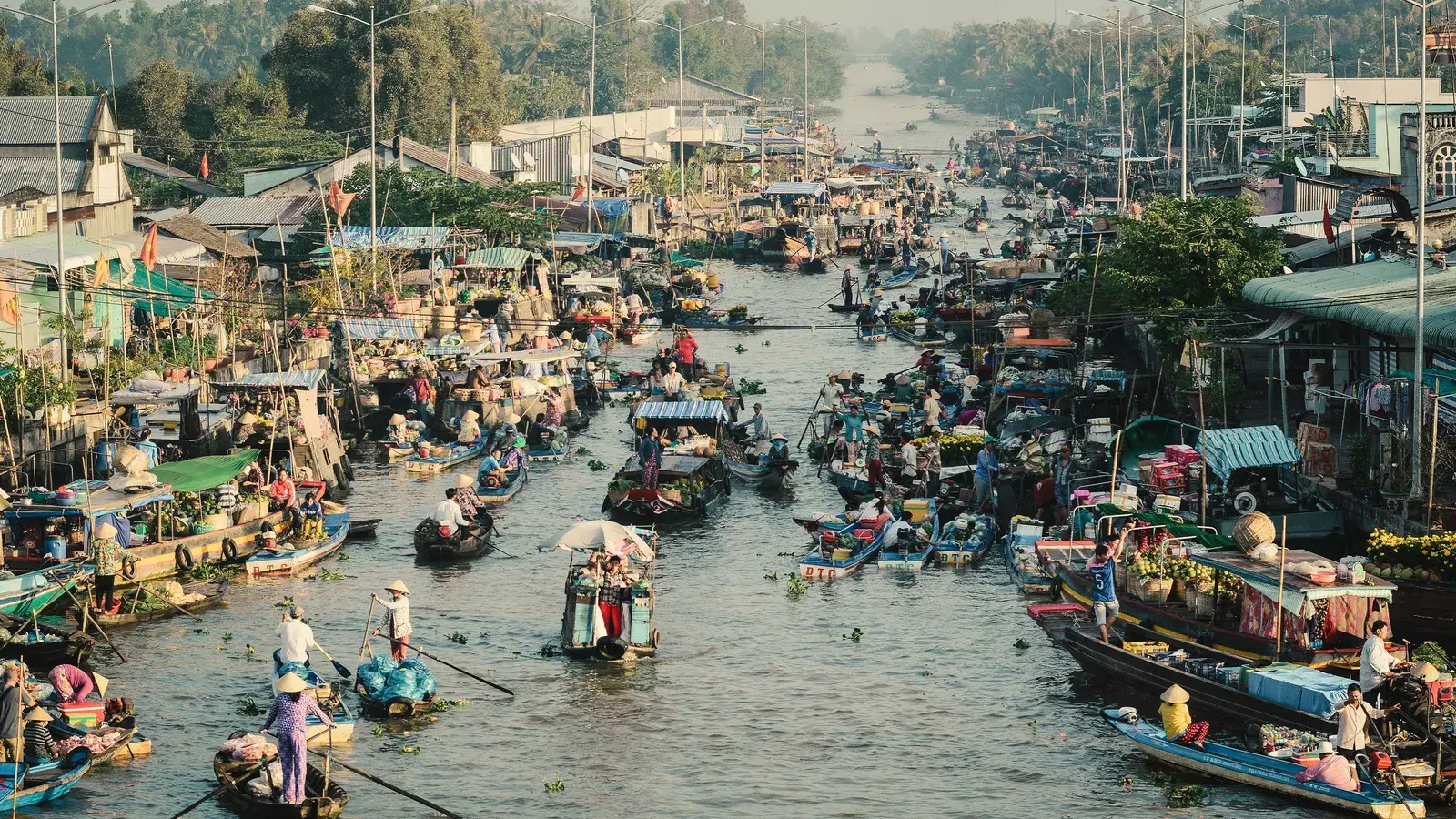
At dawn, I hurried down to the boat to help my mother. My childhood unfolded on the river, where our family anchored daily to sell food to locals and traders. Before the sun rose above the treetops, boats and motorized canoes from nearby canals converged toward the market, creating an energetic flow of traffic on the water.
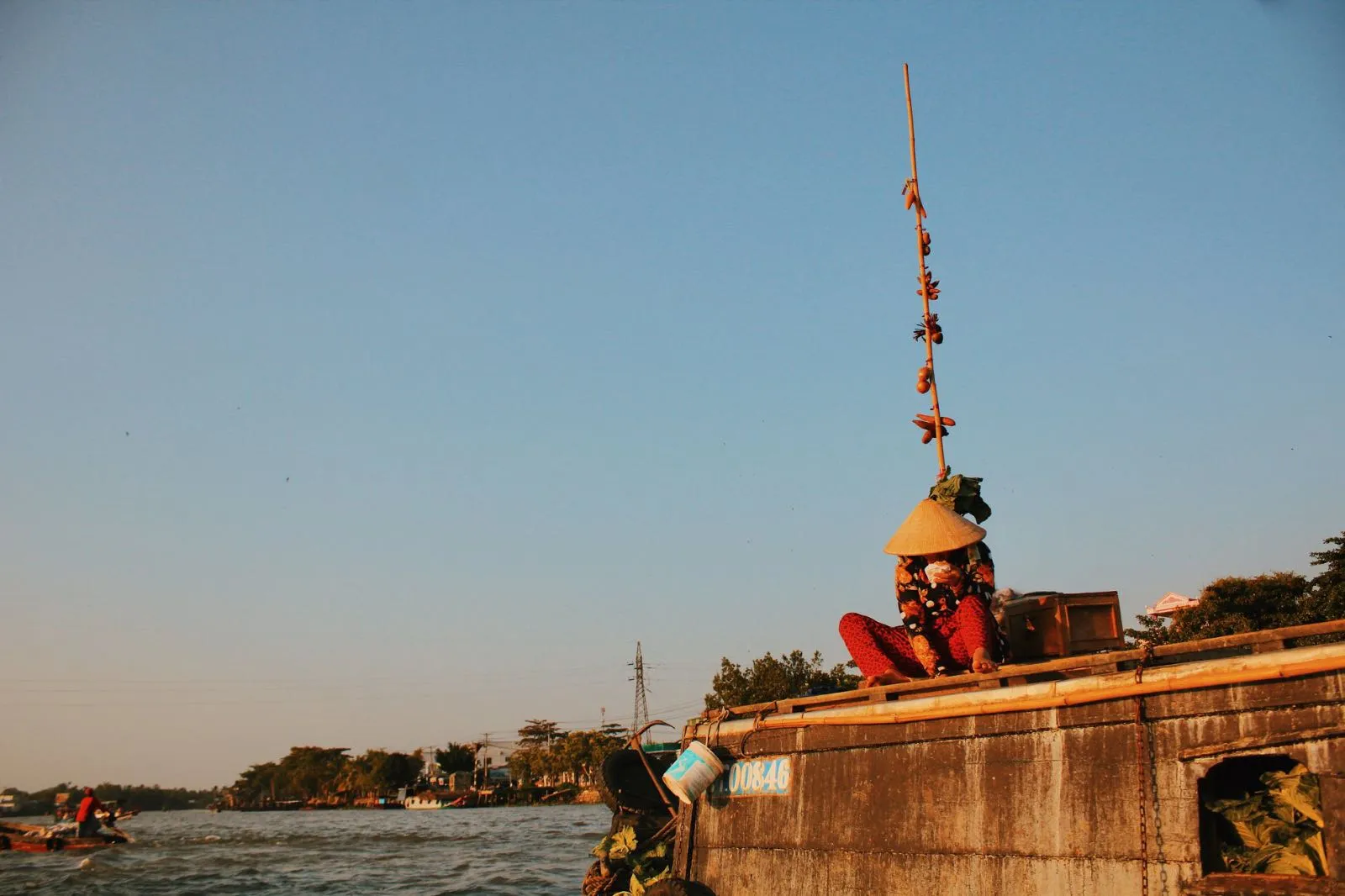
One of the most distinctive features of floating markets is the “cay beo,” a bamboo pole used by vendors to display what they sell. Goods are hung at the tip of the pole or on the bow of the boat. Some markets use horizontal poles while others place the pole upright for easier visibility. These simple signs create a lively atmosphere as boats showcasing fruits, vegetables, and household goods gather in vibrant clusters across the river.
Many people in my hometown visit the floating market every morning as part of their routine. Some row or motor their boats a long distance just to enjoy a bowl of rice porridge or bun nuoc leo, others come to buy produce or essentials and meet familiar faces. Vendors are always friendly because everyone buys from one another in both small and large quantities. Boats become floating displays of local abundance, piled high with vegetables and fruits such as gourds, rambutans, dragon fruits, and mangosteens.
I often followed my father upriver to the Cai Rang Floating Market in Can Tho, known as the region’s largest and most dynamic wholesale market. Cai Rang attracts an impressive volume of produce and is home to boats that function like mobile homes with potted plants, pets, televisions, speakers, and even motorbikes onboard. Tourists visiting Cai Rang are far more numerous than at other floating markets, adding to the lively atmosphere.
Beyond the sensory bustle, Cai Rang is where my family enjoyed a distinctive local specialty: “kho” coffee. Vendors keep coffee hot in a clay pot warmed continuously over a small fire. This method infuses the drink with a smoky fragrance, offering a unique flavor that pairs beautifully with the gentle sway of the boat at sunrise. A sip of hot coffee while watching the river awaken remains one of my most memorable experiences.
Aside from Cai Rang and Nga Nam, the Mekong Delta is home to other well-known floating markets including Nga Bay in Hau Giang, Cai Be in Tien Giang, and Tra On in Vinh Long. Each market holds its own charm and never fails to leave a lasting impression on visitors.
Floating markets reach their liveliest moments during the days leading up to Lunar New Year. Goods become more abundant and diverse. Boats delivering wholesale products travel through narrow canals while larger boats anchor to await bulk buyers. Vessels of all kinds load and unload goods from dawn until nightfall. These were the busiest yet most joyful days for my family. Boats carrying bright green watermelons crossed paths with smaller canoes selling yellow marigolds, creating an uplifting scene full of color.
For many traders, boats are both home and livelihood. Entire clusters of boats form floating neighborhoods on the river. My father used to say that each boat carries a different story, yet everyone shares the same hard-working spirit and honesty. At dusk, when we finished selling early, nearby vendors gathered for a warm drink and grilled fish, turning the river into a place of connection and camaraderie. As night settled, electric lights illuminated the water and traditional songs echoed across the market like a gentle reminder of the community that thrives here.
The rivers and canals continue to flow as they always have. They embrace every boat and every person who makes a living on the water. Even as modern life progresses, the traditions and cultural rhythms of the Mekong Delta remain deeply rooted. Life on the floating markets continues to enrich the collective memory of the region and preserves a unique way of living that has shaped generations.
Recent Post

Fusion to Open Two Landmark Hotels in Hanoi and Hue in Early 2026
Fusion Hotel Group...

Nine Luxury Travel Experiences You Must Experience in 2026
The 2026 Luxe Repo...
Nine Days of Renewal and Transformation at JW Marriott Phu Quoc
During the Lunar N...

Top 3 All Inclusive Resorts Worth Experiencing in 2026
All inclusive holi...

All Inclusive A Curated Holiday in the World of Luxury
For a long time, a...